HireVue Game: What Candidates See and What the Algorithm Scores
Candidate Falcon
Editorial Team
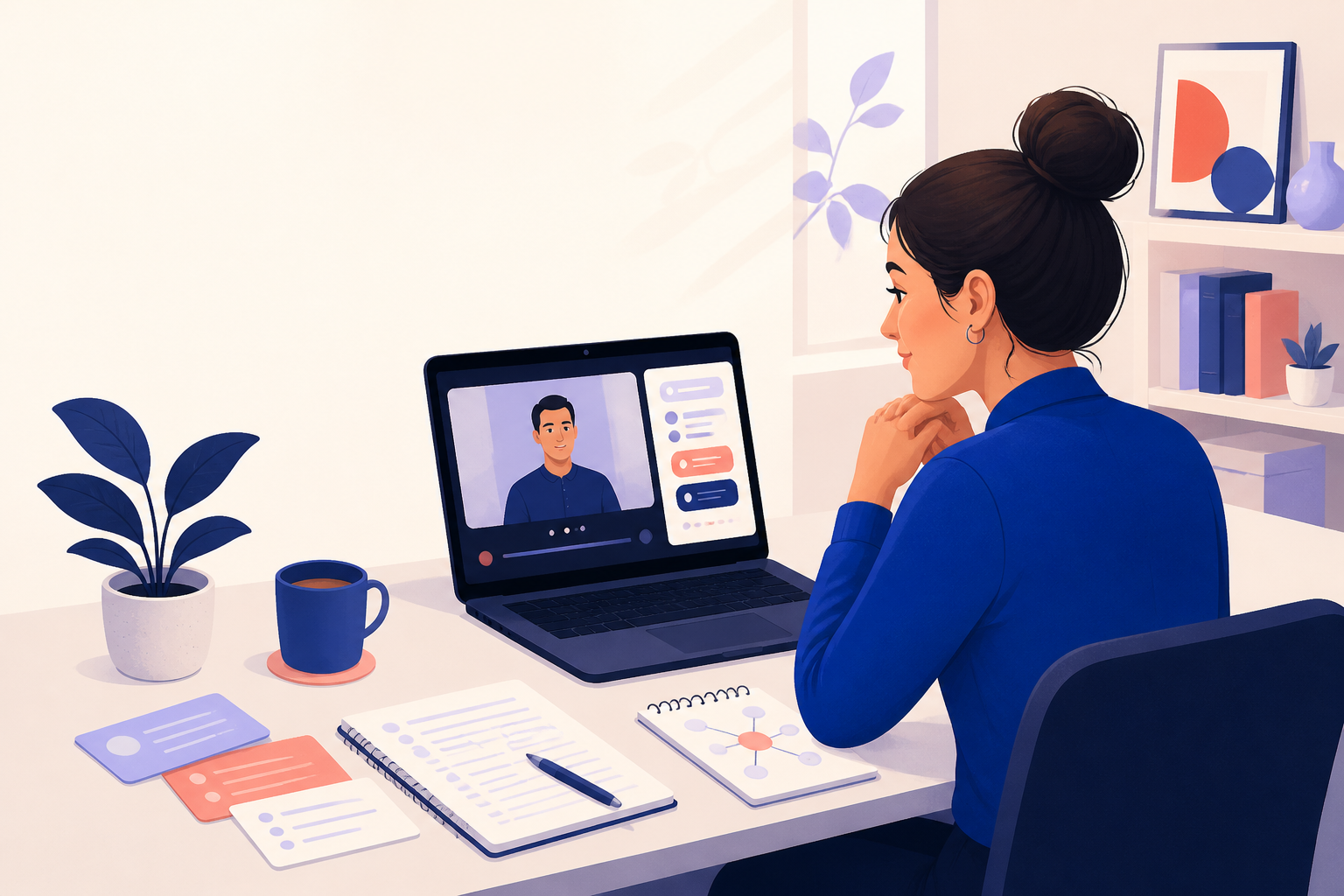
You open your email and find an invitation to complete a HireVue assessment. The deadline is 48 hours away. You click through and discover it is not a traditional interview or a multiple-choice test. It is a game.
That catches most candidates off guard. You do not know what is being measured, what a good score looks like, or whether your performance even matters. It does matter. A lot.
Here is exactly what happens inside a HireVue game, what the algorithm is actually scoring, and how to approach each format without wasting time figuring it out mid-assessment.
What Is a HireVue Game Assessment?
HireVue game-based assessments are short, interactive tasks that look like simple browser games. A full battery typically runs 20 to 30 minutes, with each individual game lasting just a few minutes. Employers use them as an early screening step, often before any human has looked at your application.
The games are not testing your gaming ability. They are measuring cognitive traits: working memory, processing speed, attention, numerical reasoning, and in some formats, emotional recognition. The scoring happens in the background while you play.
HireVue currently uses 11 distinct game types. Depending on the employer and the role, you may face one, several, or the full set.
The 11 HireVue Game Types: What You See
Here is a plain-language breakdown of each format and what you are actually doing on screen.
Digitspan
A sequence of numbers or letters flashes on screen. When it ends, you type it back. Some versions ask you to recall it in reverse order. The sequences get longer as you progress. This game measures working memory.
E-Motions
You see a series of faces or abstract images and identify the emotion being expressed, or match emotional cues to descriptions. This measures emotional recognition and social awareness.
Flashback
Images or patterns appear briefly, then disappear. You answer questions about what you just saw. This tests short-term visual memory and attention to detail.
Numerosity
Two groups of dots appear on screen. You decide as quickly as possible which group has more, without counting. The gap between groups narrows as you progress, making each judgment harder. This measures numerical intuition and processing speed.
Pathfinder
You trace a path through a grid or maze-like structure, following specific rules about which moves are allowed. This tests planning, spatial reasoning, and the ability to hold rules in mind while acting.
Portrait
You see a face and answer questions about the person's emotional state or likely behavior. This game measures empathy and social judgment.
PortraitXT
A more detailed version of Portrait. You are given additional context about a scenario and asked to make judgments about the people in it. Both accuracy and response time factor into the score.
Puzzle Picture
You see a partial image and identify which piece completes it, or arrange pieces to form a coherent whole. This tests spatial reasoning and pattern recognition.
ShapeDance
Shapes move across the screen following patterns. You identify which shape breaks the pattern or predict where a shape will move next. This measures pattern recognition and working memory under time pressure.
Singularity
You see a grid of items and identify the one that does not belong. The categories shift as the game progresses. This tests abstract reasoning and cognitive flexibility.
TeamChat
You read a simulated team chat conversation and answer questions about how you would respond or how you interpret others' messages. This measures communication style, collaboration instincts, and judgment in workplace scenarios.
What the Algorithm Actually Scores
This is the part most candidates never find out. The games look casual. The scoring is not.
The algorithm does not produce a single performance number. It builds a profile across several dimensions. Depending on the game, it may score accuracy (how often you get the correct answer), response time (how quickly you respond, measured in milliseconds), consistency (whether your performance holds steady or degrades under pressure), adaptability (how you adjust when the rules change or difficulty increases), and pattern of errors (whether your mistakes cluster around a specific type of stimulus).
For a game like Numerosity, speed matters as much as accuracy because the task is designed to push you past deliberate thinking. For TeamChat, there is no single correct answer, so the algorithm scores your responses against a model built from high-performing employees at the hiring company.
That last point is worth sitting with. Some HireVue game batteries are calibrated to a specific employer's workforce. The benchmark you are scored against is not universal. It reflects what high performers at that particular company actually look like.
Why Candidates Struggle Without Preparation
Most candidates spend the first 60 to 90 seconds of each game just figuring out the mechanics. By the time they understand what they are supposed to do, the scoring window is already underway.
The games are also designed to create mild cognitive load. You are not doing one thing at a time. You are remembering a rule, tracking a stimulus, and responding quickly, all at once. That combination feels disorienting if you have never encountered it before.
Knowing the format in advance removes that friction. You stop spending mental energy on "what is this?" and start spending it on performing.
Before you sit down to take the assessment, it is also worth checking your setup. A slow connection or the wrong browser can affect how the games render.
How to Approach Each Game Type
A few practical principles apply across all 11 formats.
Do not try to be perfect. The games are adaptive. They are designed to find your ceiling, not reward a flawless run. Chasing perfection slows you down and hurts your response time score.
Prioritize speed on perceptual tasks. For Numerosity, Flashback, and ShapeDance, your instinctive response is usually more valuable than a deliberate one. Trust your first read.
Read the rules once, carefully. For Pathfinder and Singularity, the rules are the whole game. Misreading them costs you more than any individual wrong answer.
Stay consistent. Algorithms flag inconsistency. If you score well through the first third of a game and then your performance drops sharply, that pattern shows up in the data.
Treat TeamChat like a behavioral interview. There are no trick answers, but there are answers that signal poor judgment. Think about how a thoughtful, collaborative colleague would respond.
What Comes After the Games
In most hiring funnels, the game battery is followed by a one-way video interview. You record your answers to a set of questions, and a recruiter or AI system reviews them later. The two assessments are often scored together.
If you are preparing for both, practicing them in the same session helps the transition feel natural. Candidate Falcon covers both formats: all 11 HireVue game types and video interview practice for HireVue, Spark Hire, Talview, and VidCruiter. You can also review strategies for the HireVue video interview to get ready for that second stage.
Practice Makes the Format Familiar
The single most effective thing you can do before a HireVue game assessment is see the format before it counts. Not to memorize answers, because there are none to memorize. But to remove the surprise.
When you know what Numerosity looks like, you do not waste your first 30 seconds adjusting. When you have practiced Digitspan under timed conditions, your working memory is already warmed up. That is the practical value of simulation.
Candidate Falcon simulates all 11 HireVue game types with the real timing and pressure conditions you will face on the day. You can also practice the one-way video interview that typically follows. If you want to see what is included before committing, the pricing page lists what each plan covers.
Start preparing now, before your deadline gets any closer.
Frequently Asked Questions
What is a HireVue game-based assessment? A HireVue game-based assessment is a set of short interactive tasks that measure cognitive traits like working memory, processing speed, and emotional recognition. Employers use them as an early screening step, typically before a human reviews your application.
How many game types does HireVue use? HireVue currently uses 11 game types: Digitspan, E-Motions, Flashback, Numerosity, Pathfinder, Portrait, PortraitXT, Puzzle Picture, ShapeDance, Singularity, and TeamChat. Not every employer uses all 11. The combination depends on the role and the company.
What does the HireVue algorithm actually score? The algorithm scores a combination of accuracy, response time, consistency, and how you adapt as difficulty increases. For some games, it also scores your responses against a model built from high-performing employees at the specific company you are applying to.
Can you practice HireVue games before the real assessment? Yes. Practicing the format in advance is one of the most effective ways to improve your performance, because it removes the time you would otherwise spend figuring out the mechanics during the real thing. Candidate Falcon simulates all 11 game types with real timing conditions.
Does your score on HireVue games affect your application? In most cases, yes. The game battery is used as a screening tool, and candidates who fall below a score threshold may not advance to the next stage. The weight given to game scores varies by employer.
How long does a HireVue game assessment take? A full HireVue game battery typically takes between 20 and 30 minutes. Individual games last two to four minutes each, and you usually complete the full assessment in a single session.
What is the difference between HireVue games and a traditional aptitude test? Traditional aptitude tests use multiple-choice questions with clear right and wrong answers. HireVue games measure the same underlying traits through interactive tasks, and the scoring captures both what you answer and how quickly and consistently you respond. The format is less familiar, which is exactly why preparation helps.