What Is a HireVue Game Assessment? Everything Candidates Need to Know in 2026
Candidate Falcon
Editorial Team
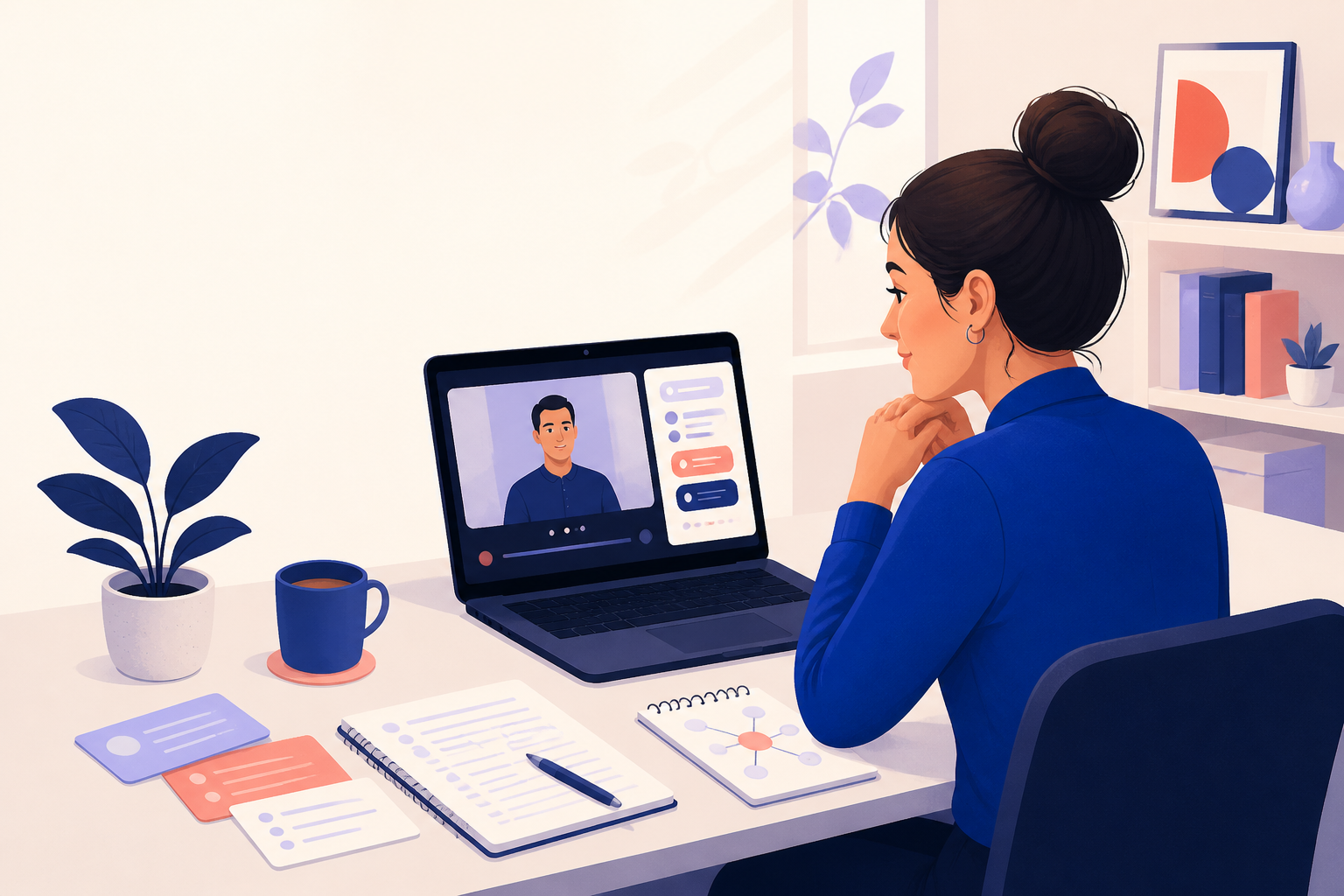
You just received an email from an employer asking you to complete a HireVue assessment. You click the link, and instead of interview questions, you're looking at something that resembles a video game. That's not a mistake. That's a HireVue game-based assessment, and it's now a standard part of the hiring process at many large employers.
This guide explains exactly what these assessments are, what each game type involves, what employers may be measuring, and how to prepare before your deadline.
What Is a HireVue Game Assessment?
A HireVue game assessment is a series of short, interactive tasks delivered through the HireVue platform. Employers use them as a screening tool, typically before any human interview takes place.
The games are not designed to test your knowledge of the role. They measure underlying cognitive and behavioral traits — things like attention, working memory, decision-making speed, pattern recognition, and emotional awareness. The idea is that these traits predict job performance more consistently than a resume or a phone screen.
Each game usually lasts between one and five minutes. A full assessment typically includes several games played back to back, with the whole session taking around 20 to 30 minutes. You complete it in your browser, on your own time, before the deadline the employer sets.
Why Do Employers Use Them?
Game-based assessments let employers screen large numbers of candidates quickly and consistently. Because every candidate plays the same games under the same conditions, the results are easier to compare than unstructured CV reviews.
For candidates, that cuts both ways. The format removes some of the advantages that come from a polished CV or a well-connected network. But it also introduces a new kind of disadvantage: if you've never seen this format before, you're likely to perform below your actual ability simply because the mechanics feel unfamiliar.
That's the core reason preparation matters. Not to game the system, but to make sure the format doesn't work against you.
The 11 HireVue Game Types
HireVue uses up to 11 different game types. Not every employer includes all of them — a typical assessment might feature three to six games selected for the role. Here's what each one involves:
1. Digit Span
You see a sequence of numbers, then recall them in order (or reverse order). This tests working memory and attention.
2. Numerosity
Two groups of dots appear briefly on screen. You judge which group has more dots without counting. This measures numerical estimation and quick decision-making.
3. Emotion Recognition (Emotion Game)
Faces flash on screen showing different expressions. You identify the emotion as quickly as possible. This assesses emotional awareness and processing speed.
4. Balloon Analogue Risk Task (BART)
You pump up a virtual balloon to earn points. The balloon can pop at any moment. You decide when to stop and bank your earnings. This measures risk tolerance and decision-making under uncertainty.
5. Flanker Task
A row of arrows appears. You respond to the direction of the central arrow, ignoring the surrounding ones. This tests attention control and the ability to filter distractions.
6. Pathfinder
You connect numbered and lettered dots in alternating sequence (1, A, 2, B, 3, C...) as quickly as possible. This measures cognitive flexibility and processing speed.
7. Flashback
You see a sequence of items, then answer questions about what you observed. This tests short-term memory and recall accuracy.
8. Shape Dance
Shapes move across the screen. You track specific ones while ignoring others. This assesses divided attention and working memory under load.
9. Puzzle Picture
You rearrange pieces to complete an image within a time limit. This measures spatial reasoning and problem-solving speed.
10. Portrait Game
You view a series of faces and later identify which ones you've seen before. This tests recognition memory.
11. Card Sorting
You sort cards into categories based on rules that may change without warning. This measures adaptability and rule-learning speed.
What Are Employers Actually Measuring?
HireVue does not publish its scoring algorithms, and no preparation platform can tell you exactly how you'll be evaluated. What's known is that game-based assessments are designed to measure traits that tend to predict performance in demanding roles.
These typically include:
- Cognitive ability — how quickly and accurately you process information
- Working memory — how much you can hold and manipulate in your head at once
- Attention control — how well you focus on what matters and ignore what doesn't
- Emotional intelligence — how accurately you read and respond to emotional signals
- Risk and reward judgment — how you make decisions when outcomes are uncertain
- Cognitive flexibility — how quickly you adapt when rules or conditions change
None of these are things you can cram for the night before. But you can reduce the disadvantage that comes from encountering the format for the first time during the real assessment.
Can You Actually Prepare for HireVue Games?
Yes — with an important caveat. Preparation won't reveal the scoring system or guarantee you pass. What it does is remove the confusion and hesitation that come from seeing an unfamiliar format under time pressure.
The first time most people play a game like Digit Span or Pathfinder, they spend the first 30 seconds figuring out the mechanics. In a real assessment, those seconds count. Practicing beforehand means you already understand what's being asked, so you can focus on performing rather than orienting.
There's also a practical benefit: some games require specific techniques. In Pathfinder, for example, scanning ahead to locate the next target before you finish the current one makes a measurable difference to your speed. You only discover that through practice.
How to Prepare Before Your Deadline
Understand the format before you start
Read about each game type so you know what to expect. The mechanics, timing, and what you're being asked to do should feel familiar before you sit the real assessment.
Practice under realistic conditions
Use a tool that replicates the actual game mechanics, timing, and pressure. Reading about a game is useful; playing a realistic simulation is better. Platforms like Candidate Falcon offer practice for all 11 HireVue game types with strategy guides and realistic simulations, so you can work through each one before your deadline.
Don't rush your setup
Check your internet connection, browser, and environment before you start. HireVue games are timed to the second. A slow connection or a distracting background won't cause you to fail, but they add unnecessary friction.
Practice more than once
A single run-through isn't enough. The goal is for the format to feel natural, not just familiar. Repeat each game until the mechanics feel automatic.
Treat the deadline seriously
Most employers set a specific window for completing the assessment. Don't leave it until the night before. Give yourself at least two to three days to practice, especially if you're applying for a competitive role.
What Happens After the Games?
In many hiring processes, the game-based assessment is followed by a one-way video interview — also delivered through HireVue. You record answers to pre-set questions with no live interviewer present.
If your employer's process includes both stages, it's worth preparing for the video interview at the same time. The game assessment and the video interview together form the automated screening layer that determines whether you advance to a human conversation.
Common Mistakes to Avoid
- Skipping the practice round — HireVue often provides a brief tutorial before each game. Use it. Don't skip ahead.
- Playing on a phone — Most games are designed for desktop. A small screen and touchpad controls can affect your performance.
- Treating it like a personality quiz — These are timed, performance-based tasks. Speed and accuracy both matter.
- Assuming experience makes you immune — Many experienced professionals are caught off guard by this format. Your professional background doesn't prepare you for a digit span task.
Start Preparing Now
Your real assessment should not be the first time you experience the format. If you have a HireVue game assessment coming up, the most useful thing you can do is practice the actual game mechanics before the deadline.
Candidate Falcon covers all 11 HireVue game types with realistic simulations, strategy breakdowns, and preparation resources. You can start immediately and work through every game type before your assessment window opens.
Frequently Asked Questions
What is a HireVue game assessment? A HireVue game assessment is a series of short, interactive tasks used by employers to screen candidates. The games measure cognitive and behavioral traits such as working memory, attention, emotional recognition, and decision-making speed. They are typically completed online before any human interview.
How many games are in a HireVue assessment? HireVue has 11 game types in total, but most employer assessments include only a selection — typically three to six games. The specific games used depend on the role and the employer's configuration.
How long does a HireVue game assessment take? Most HireVue game assessments take between 20 and 30 minutes to complete. Individual games usually last one to five minutes each.
Can you prepare for HireVue game assessments? Yes. While no preparation can reveal the scoring algorithm or guarantee a result, practicing the game mechanics beforehand significantly reduces the disadvantage of encountering an unfamiliar format under time pressure. Realistic practice helps you focus on performing rather than figuring out the rules.
What do HireVue games measure? HireVue games are designed to measure underlying traits such as working memory, cognitive flexibility, attention control, emotional intelligence, numerical estimation, and risk judgment. These traits are considered predictive of job performance across a range of roles.
Is the HireVue game assessment the same as a video interview? No. The game assessment and the video interview are separate stages. Some employers use only games, some use only video interviews, and some use both in sequence. If your invitation mentions games specifically, focus your preparation there first.
What happens if you don't prepare for HireVue games? Candidates who encounter game-based assessments without any preparation often spend the first part of each game understanding the mechanics rather than performing. This typically results in a weaker score than the candidate's actual ability would suggest. Preparation removes that disadvantage.